How Long Does SEO Take? A Realistic Framework is useful when it helps a real reader or operator make a better decision, not when it adds another isolated SEO tactic. For arjns-style publishing, the page should explain the problem, show the practical workflow, name the risks, and give a repeatable way to review the result. SEO has no universal finish date because discovery, crawling, indexing, impressions, rankings, qualified visits, and business outcomes happen at different speeds. Measure the evidence chain and investigate the stage that stops progressing.
There is no single SEO waiting period
SEO takes as long as the slowest unresolved stage between discovery, crawl, indexing, relevance, competitive selection, click, and useful business action. A technically sound update on an established page may be processed sooner than a new site earns stable visibility, but neither has a guaranteed deadline. Replace a blanket month estimate with dated evidence: when the URL became discoverable, when it was crawled, which canonical was indexed, when intended-query impressions began, how position bands changed, and whether qualified visits completed the page's intended action.
Build a milestone evidence ledger
A useful forecast states the next observable event, its dependency, and the review window. It does not convert uncertainty into a ranking promise.
- Attach a dated artifact to every milestone: sitemap or internal-link release, server log or inspection result, index report, query export, and conversion record.
- Use weekly checks for breakage, monthly cohorts for directional search movement, and longer comparable periods for outcomes affected by seasonality.
- Escalate immediately when access regresses; investigate relevance only after the correct canonical is indexed and has received a fair observation window.
Locate the stalled SEO milestone
Start by separating the user need from the search engine signal. The user need is what the page must solve. The search signal is how crawlers and ranking systems understand that solution. If the page only chases the signal, it becomes thin. If it only helps the reader but hides the structure, it can be harder to discover. The right answer is a clear page with crawlable HTML, precise metadata, useful examples, internal links, and a measurable follow-up.
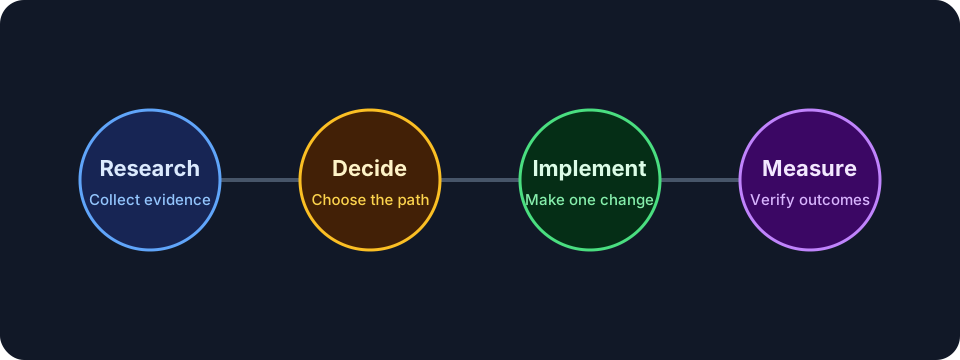
Build an evidence-based review cadence
- Define the target query group, useful landing pages, current search metrics, conversions, and outside influences before work begins.
- Verify status codes, robots rules, canonicals, sitemap inclusion, internal discovery, rendering, and server reliability.
- Confirm indexing with URL Inspection and Page indexing reports instead of relying only on a site search.
- Watch early relevance signals such as intended-query impressions, query diversity, correct landing pages, and position distribution.
- Evaluate title promises, snippets, SERP features, device and country mix, and CTR at comparable positions.
- Review whether the page completes the intent with accurate explanations, original evidence, useful examples, and clear next steps.
- Check technical failures weekly, directional query and page trends monthly, and durable strategy decisions quarterly.
- Test one documented hypothesis at a time and allow enough time for recrawling and reprocessing before assigning cause.
- Document the expected search intent, the page promise, and the verification method before publishing.
- Review the rendered page on mobile because cramped layouts, hidden tables, or broken controls can turn good content into a poor experience.
Milestone ledger from discovery to outcomes
Track six milestones: discovery through sitemap and links; crawl evidence through inspection or logs; an indexed canonical; impressions for intended queries; improving position bands; and qualified clicks or actions. When one stage is flat, fix that stage before changing work farther down the funnel.
- Write the page brief before writing the final article.
- Name the primary query group and the reader's next action.
- Check the rendered page, not only the draft data.
- Record the verification date so later reporting has context.
SEO progress evidence checklist
- The title, H1, summary, and first section describe the same practical outcome.
- The page includes examples or decision rules a reader can apply immediately.
- Important links are crawlable anchors with natural context.
- The sitemap includes the page only when it is live and canonical.
- The page avoids claims that cannot be verified from visible content or data.
- The review date, publish date, and next measurement point are clear to the editor.
Timelines, dependencies, and uncertainty
Use decision rules to keep the work honest. A rule prevents the page from becoming a collection of SEO opinions and makes the review easier for another person. The rule should explain what to do when evidence is weak, when a page is too thin, when a signal conflicts with another signal, and when the safest answer is to wait for better data.
- If the page cannot answer a clear reader need, do not publish it as indexable content.
- If the technical signal conflicts with visible content, fix the visible content or remove the signal.
- If a section only repeats the title in different words, replace it with an example, checklist, or caveat.
- If a change cannot be verified, mark it as an editorial assumption rather than a completed fix.
- If a future page is scheduled, keep it out of public links and sitemaps until the publish date.
When waiting is the wrong recommendation
Do not advise patience when production returns an error, robots or noindex blocks the intended page, the canonical points elsewhere, rendering omits the main content, or analytics stopped recording. Those are observable failures. Equally, do not declare failure from a few quiet days after a change or compare a seasonal peak with a low-demand period. Freeze the comparison definition, document releases and outside events, and decide in advance what evidence will trigger investigation.
Timeline claims that mislead stakeholders
- Promising a ranking or traffic result by a fixed date.
- Treating indexing alone as proof that SEO is working.
- Changing many variables every week and losing causal evidence.
- Comparing seasonal periods without adjusting for demand.
- Reporting average position without query, page, country, and device context.
Measure progress by stage, not promises
Measure this work with a short feedback loop: crawl status, sitemap visibility, impressions for the intended query group, clicks and CTR when snippets change, engagement on the page, and whether the reader continues to a related guide or tool. Do not judge success from a single day of data; search systems, crawling, and reporting all move on different timelines.
SEO progress evidence checklist: release checks
- Confirm the canonical URL, title, meta description, headings, and language alternates.
- Open the page on mobile and desktop to check spacing, tables, diagrams, and code blocks.
- Verify the page appears in the sitemap only when it is live.
- Check that images have useful alt text and do not create layout shift.
- Add internal links from related guides after the destination page is public.
Recommendation: investigate the first broken stage: AI review prompt
Use this prompt after you have a real URL, page draft, or crawl export. It is meant to produce fixes you can review, not automatic publishing decisions.
Act as a careful SEO implementation reviewer.
Page/topic: How Long Does SEO Take? A Realistic Framework
URL or draft: [paste URL or content]
Search intent: [intent]
Review: crawlability, title, meta description, headings, content depth, examples, internal links, structured data/canonical needs, mobile UX, and measurement plan.
Return prioritized fixes with exact page sections to change.
Frequently asked questions
Does SEO always take six months?
No. Different milestones move at different speeds, and no fixed window applies to every site or query.
How soon can a new page be crawled?
Crawling can take days to weeks, and requesting a crawl does not guarantee crawling or indexing.
What should improve first?
Discovery, crawl, and index evidence usually comes before relevant impressions, rankings, clicks, and outcomes.
When should I investigate instead of waiting?
Investigate access and indexing failures immediately; assess sustained relevance or traffic stagnation against a planned review window.
Recommendation: investigate the first broken stage
A strong SEO page is not only optimized for a keyword. It is reachable, understandable, useful, and honest about what it can answer. Before publishing, check the rendered page, the snippet fields, internal links, indexability, and whether a reader can act without opening five more tabs.
Revisit the page when search intent changes, when the product or platform changes, when Search Console shows new query groups, or when users repeatedly need clarification. Refreshing content should make the page more accurate and useful; it should not be a cosmetic date change.