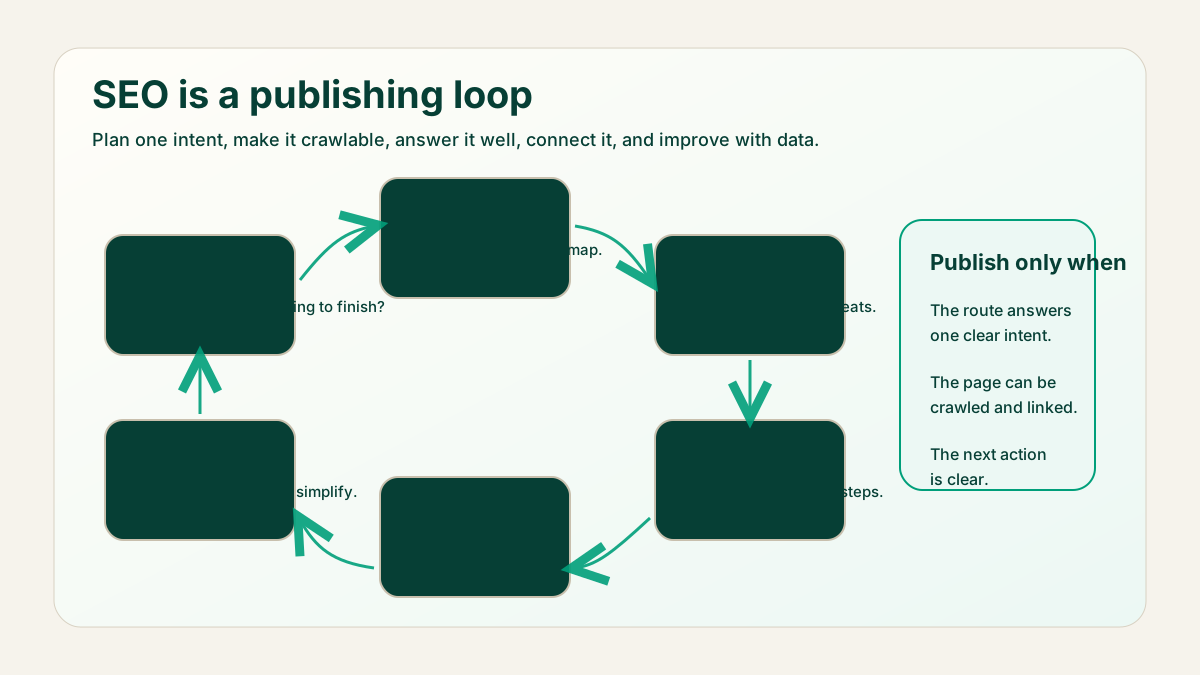
SEO is the work of making useful pages easier for search engines and people to understand. For a small website, the best starting point is not a giant checklist. Build a repeatable publishing system: choose one search intent, make the page crawlable, answer the task clearly, connect it with internal links, and improve it with real search data.
Start with search intent
Before writing, decide what the searcher wants to do after landing on the page. A beginner query usually needs definitions, a safe first workflow, examples, and warnings about common mistakes. A comparison query needs tradeoffs. A tool query needs a working interface, input guidance, and a clear result. Matching the page to the intent matters more than repeating the same keyword many times.
- Write one primary answer for one main keyword.
- Use related questions only when they support the main task.
- Prefer concrete examples over vague claims.
- Keep the title and introduction aligned with the page's real outcome.
Map the page before writing
A simple map prevents the page from turning into a loose article. Write the search intent, the promise of the page, the sections needed to complete that promise, and the action a reader should take after reading. If a section does not move the reader closer to the task, cut it or move it to a different page.
Keyword: beginner seo guide
Intent: learn a safe first SEO workflow
Page promise: explain what to fix first and how to measure it
Required sections: intent, crawlability, content, on-page basics, links, measurement
Next action: audit one important page and publish one improvement
Make pages crawlable and indexable
A page cannot earn search traffic if crawlers cannot reach it or if metadata sends mixed signals. Use stable URLs, server-rendered content, descriptive headings, canonical URLs, clean internal links, and a sitemap that includes only live pages. Do not publish thin future pages into the sitemap, and do not link users to pages that are not ready.
- Every important page should be reachable through normal links, not only a sitemap.
- The canonical URL should match the public route you want indexed.
- Private, duplicate, search-result, and utility routes should not compete with useful public pages.
- A page blocked from crawling can still be discovered as a URL, so do not use robots.txt as a privacy system.
Write useful content before optimizing details
Good SEO content helps the reader finish a task. For a guide, that means explaining the concept, showing the steps, giving examples, describing edge cases, and making the next action obvious. For a tool page, the tool should do the job first, and the surrounding copy should explain when to use it, what the result means, and what to check before publishing.
The easiest quality test is to ask whether a reader could act without opening five more tabs. If the answer is no, add the missing example, checklist, diagram, or warning directly on the page. Search engines can summarize text, but a useful page should still be worth visiting because it gives structure, judgment, and a result.
Cover the on-page basics
- Use one clear H1 that describes the page.
- Write a title that is specific and not clickbait.
- Write a meta description that helps users decide whether to visit.
- Use short sections with descriptive H2 headings.
- Add internal links where they naturally help the next step.
- Use alt text when an image explains real content.
Connect guides and tools
Internal links should feel like useful next steps, not decoration. A beginner SEO guide can link to a technical SEO checklist, a robots.txt tool, a speed checklist, or a meta tag preview tool when those routes help the reader complete the same workflow. Link from the older page to the newer page as well, so crawlers and readers can discover it naturally.
- Link from broad guides to specific implementation guides.
- Link from tool pages back to the guide that explains the decision.
- Use descriptive anchor text that says what the next page helps with.
- Avoid adding links only because a keyword matches; the next page must help the current task.
Measure and improve gradually
After publishing, watch impressions, clicks, indexed status, and the queries that actually trigger the page. Improve the page when data shows a gap: weak title, missing section, poor internal links, slow page, confusing introduction, or content that does not answer the query clearly enough.
30-day review checklist
- Is the page indexed?
- Which queries triggered impressions?
- Is the title matching those queries?
- Which section should answer the strongest missed intent?
- Which related page should link here?
- Does the page need a diagram, tool, table, or example?
Common beginner mistakes
- Publishing many short pages that answer the same intent.
- Writing title tags before deciding the page outcome.
- Adding generic sections that do not help the reader complete the task.
- Forgetting to update internal links after publishing a useful new page.
- Measuring traffic only, instead of checking the queries and pages that changed.
Final recommendation
Treat SEO as a publishing system: choose a useful topic, build a crawlable page, answer the intent clearly, add examples or tools that make the page worth using, link it from related pages, and improve it with real search data. That routine is more reliable than chasing isolated tricks because it compounds every time you publish and revise.